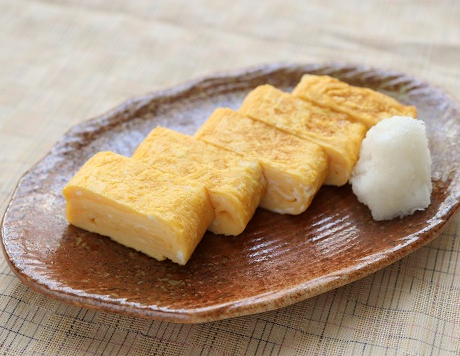
Japanese egg omelet, tamagoyaki, can be divided into two main types:
Atsuyaki tamago, a sweet version from the Kanto region, cooked until slightly browned with plenty of sugar, and Dashimaki tamago, a savoury version from the Kansai region, which is made with broth and usukuchi shoyu (light soy sauce) instead of sugar for a salty taste. Dashimaki tamago is known for its soft and fluffy texture and is often served with grated radish.
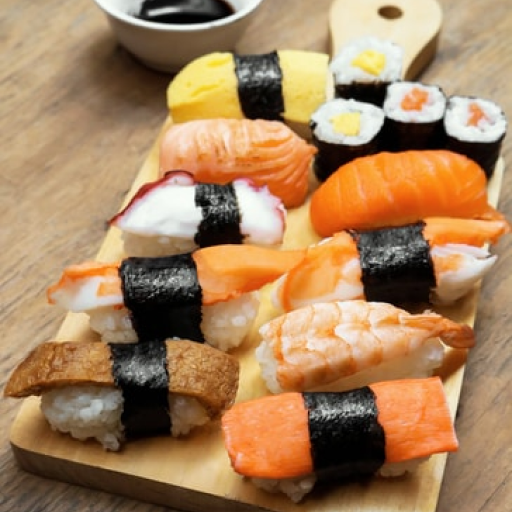
In addition to these two types of tamagoyaki, there is also a slang term called gyoku, which refers to a sweet tamagoyaki served at sushi restaurants. The name is derived from the on'yomi (Chinese reading) of the character for egg, tamago. To test the skills of a sushi chef, it is said that one should order gyoku first. Gyoku is made by adding shrimp or minced fish meat, mirin, and other ingredients to the egg mixture and cooking it over low heat for a long time until it has a castella-like texture. It requires a high level of skill to season and cook it properly.